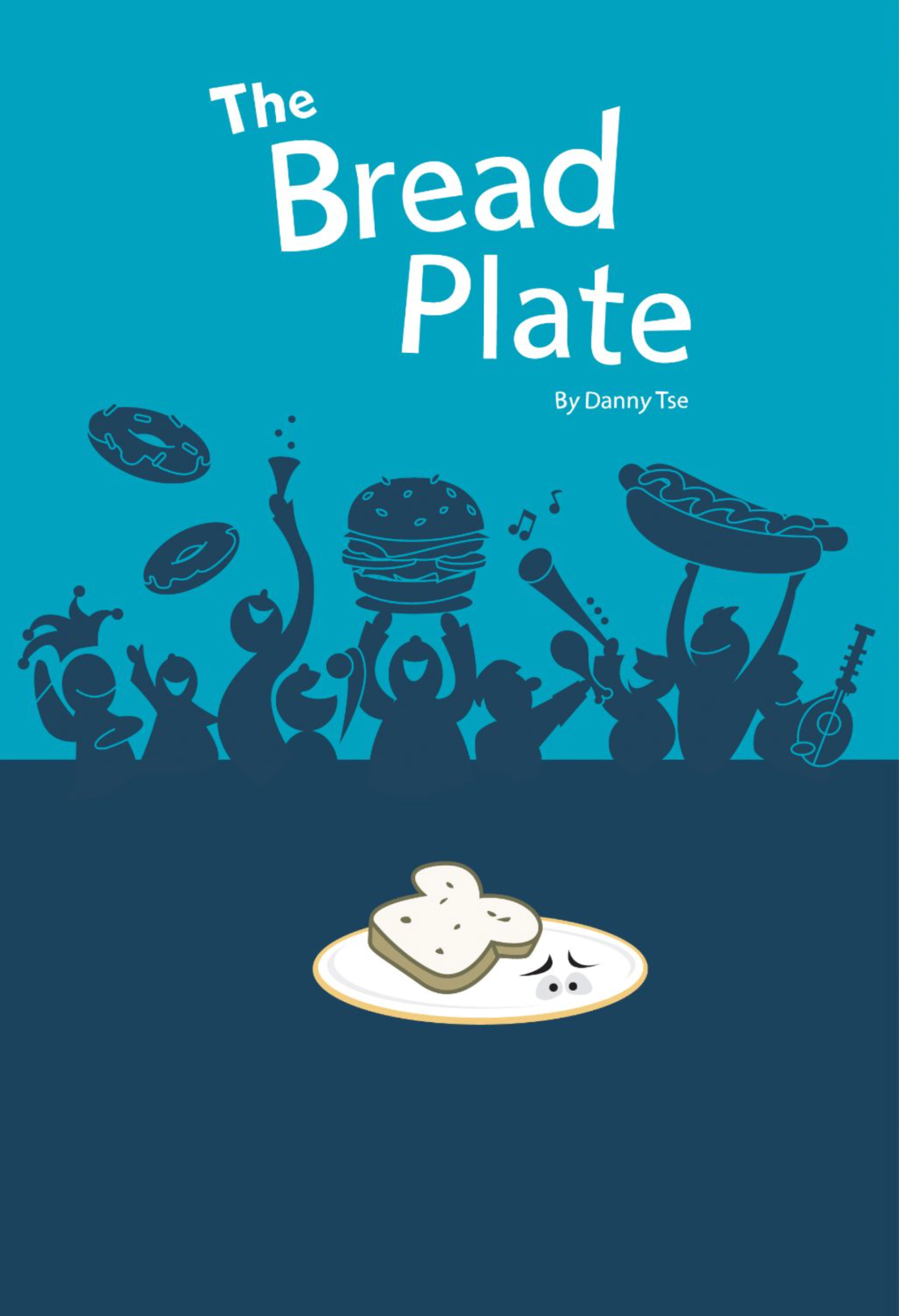
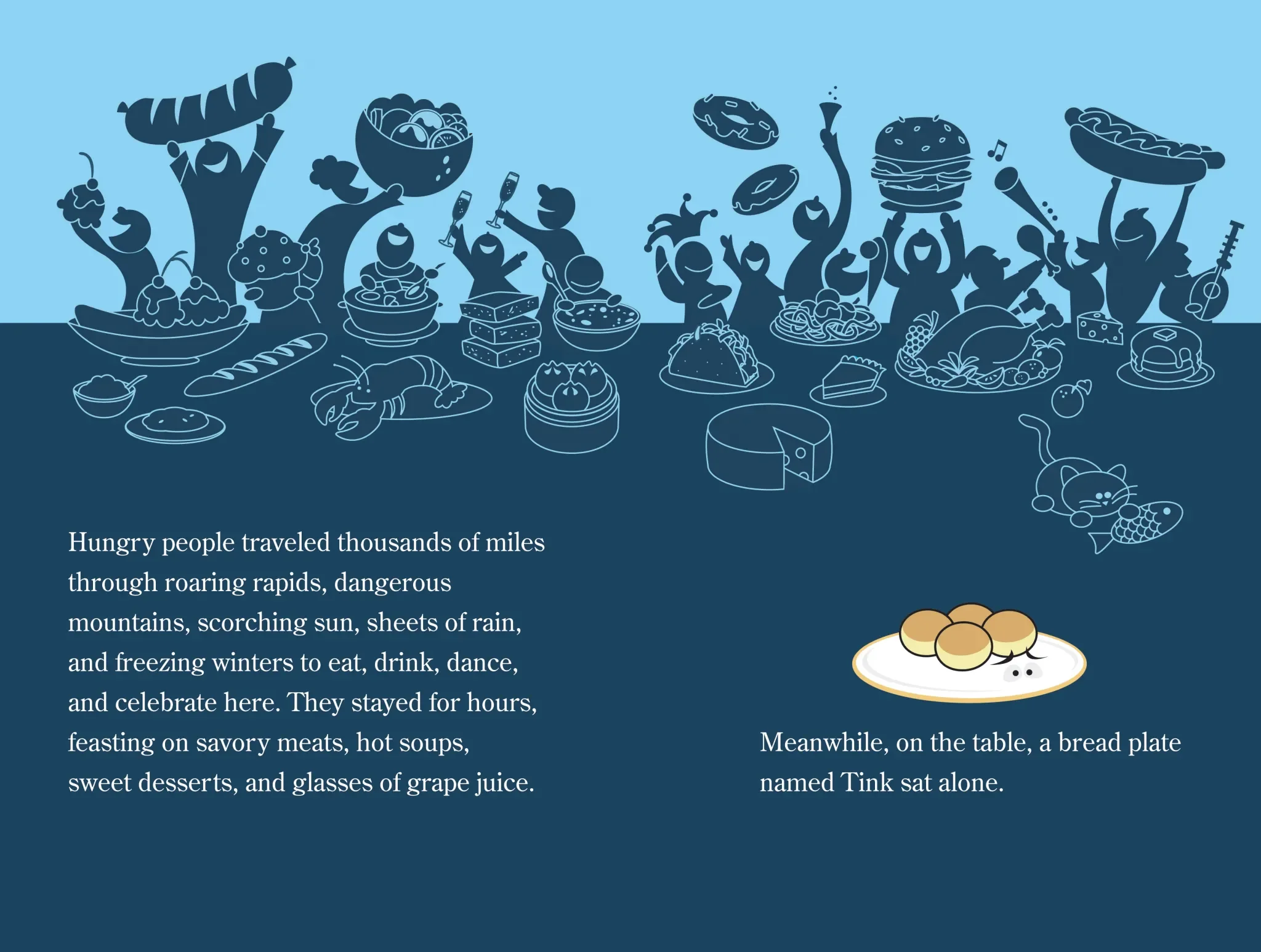
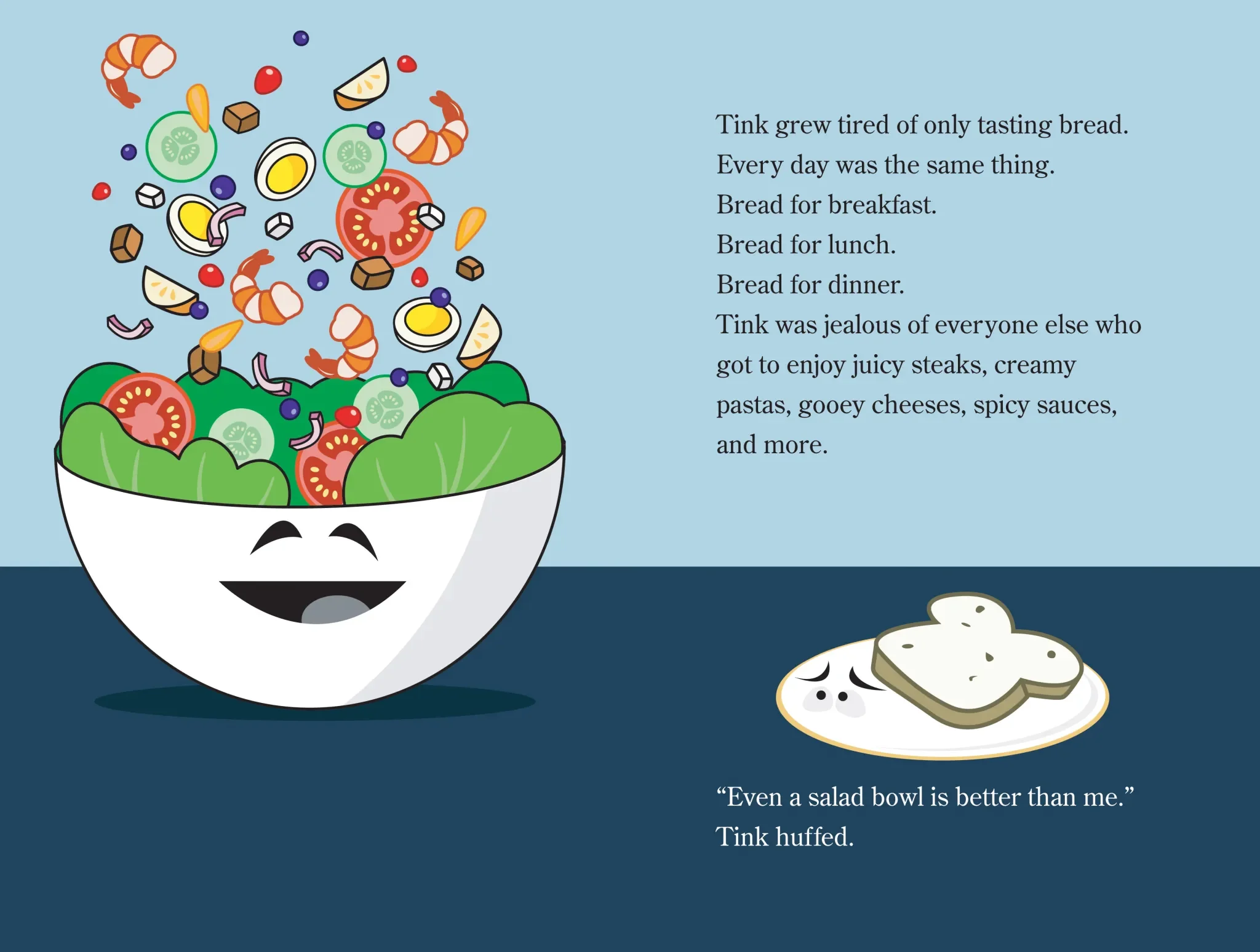
This story is about a bread plate named Tink. While all the other restaurant plates and utensils eat delicious food, Tink only gets to taste bread, which makes him feel inadequate. Follow along as Tink tries to overcome being a bread plate and how an unexpected friendship with a little girl teaches him that friendship is more important than the things he was chasing.
I hope this book will teach children:
To never give up your goals
To avoid comparing themselves to others
The power of friendship
The beauty of being yourself
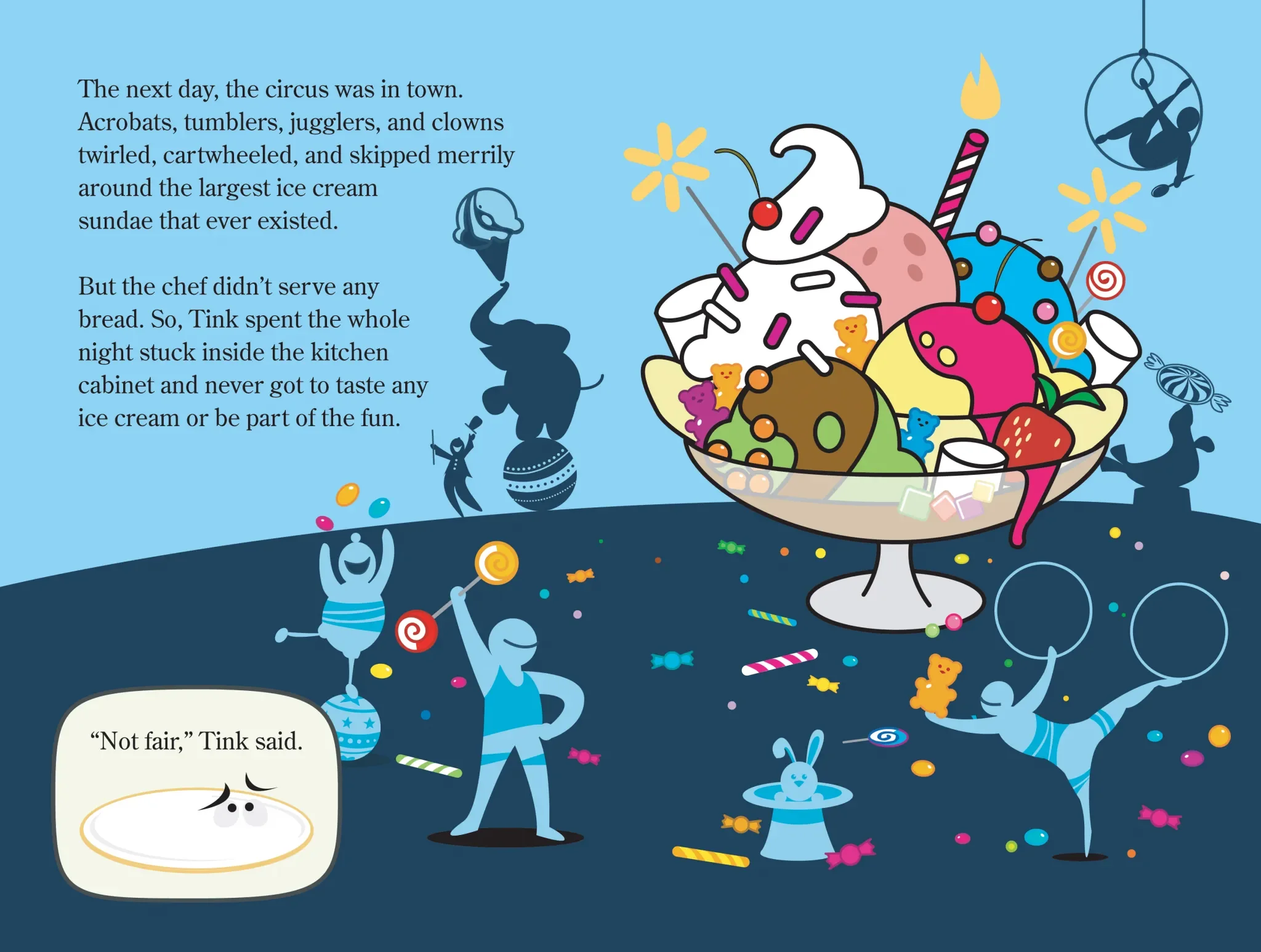
This book is filled with fun and delicious illustrations, a heartwarming story, and a powerful message.
“The “Bread Plate” was created for kids ages 3-8, and is perfect for parents, educators, and counselors.
The Bread Plate
FAQs
Why did you decide to write a children’s book?
I had two reasons why I made a children’s book my next project.
After I had published my first book, a psychological thriller, it became abundantly clear that many friends and family members could not read it due to language barriers, sensitivity to the subject, or age. I thought a super short story in the form of a children’s book would be another fun way for them to enjoy something I created.
The second reason had more to do with personal growth as a storyteller and a writer. I could have tried my hand at another genre, say Romance or Fantasy, and that would have been a challenge in and of itself. However, there was something incredibly appealing about being limited in the number of words I could use to tell a compelling story.
Where did the idea come from?
The story was originally about a plate, Tink, who loved to eat, and at one point in the story, Tink got damaged and thrown out with the garbage. Yeah, it got pretty dark, and I remember my wife had this expression that gently told me the story was lacking (it sucked).
She emphasized the need to treat the moment as a learning experience. So, it was back to the drawing board, and I was at a loss for a while.
One night, while preparing spaghetti for dinner, I grabbed this one plate I always used to serve bread. That gave birth to the idea of an envious bread plate that wanted what the other plates had. From there, my wife helped me craft a story about overcoming a negative perception one might have of themselves for no reason other than because they compared themselves to others.
What was it like to do the illustrations?
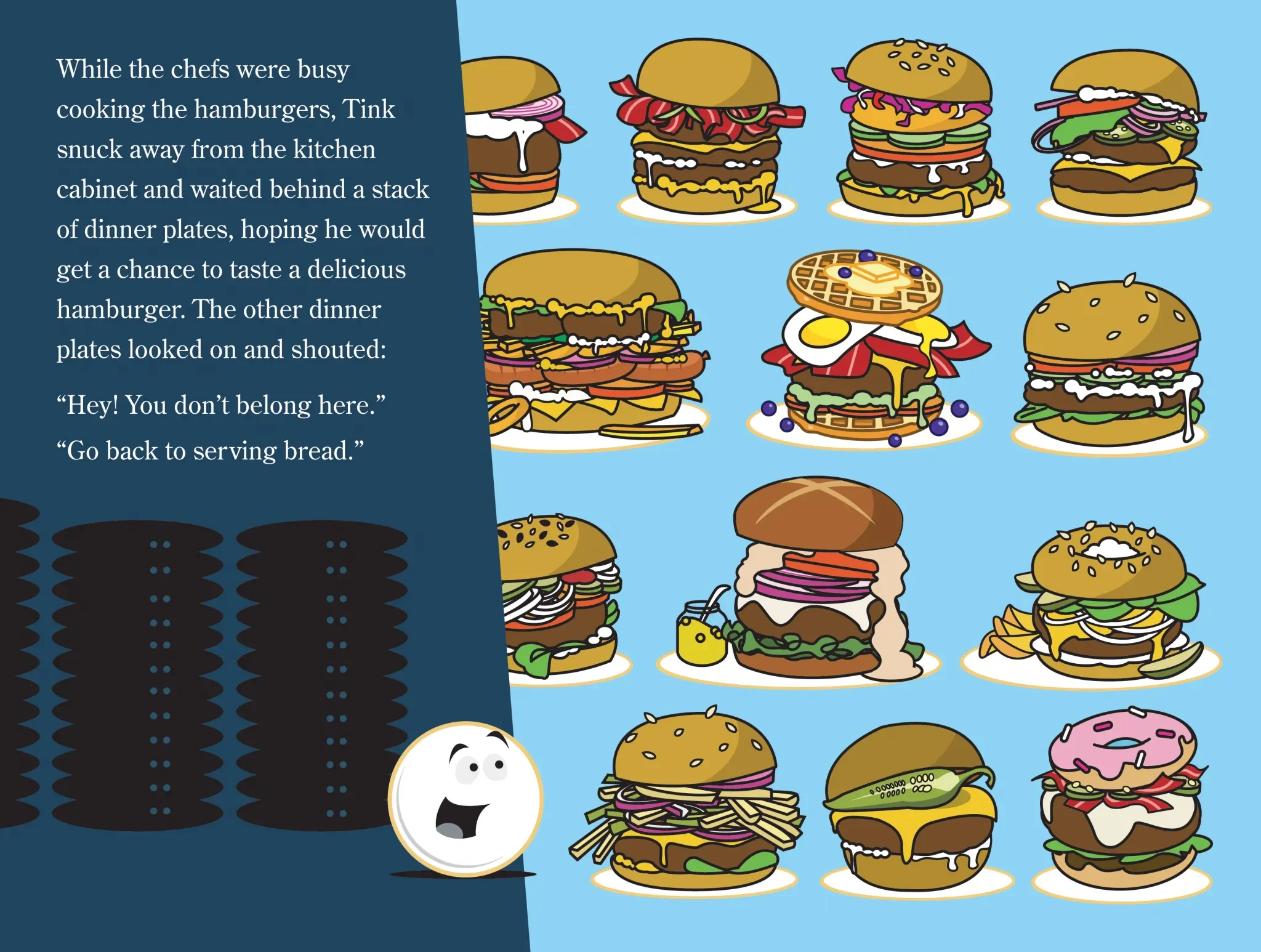
It was hard. It’s one thing to see your words flow from one sentence to another in a Word document. It’s another thing to segment the story meaningfully and have a corresponding visual image that’s fun to look at and can express and accentuate the words on the page. I’ve had to rewrite some parts to accommodate how a person would flip from one page, one moment, to another.
Where did the name Tink come from?
It’s the sound a fork or knife makes when it taps a plate, something Tink never experienced firsthand because no one uses silverware to eat bread off a bread plate.